📜 History · 1900 / IGP 2014
Piadina: 'the national bread of Romagna'
From peasant flatbread to beach-kiosk icon, with a little help from a poet.
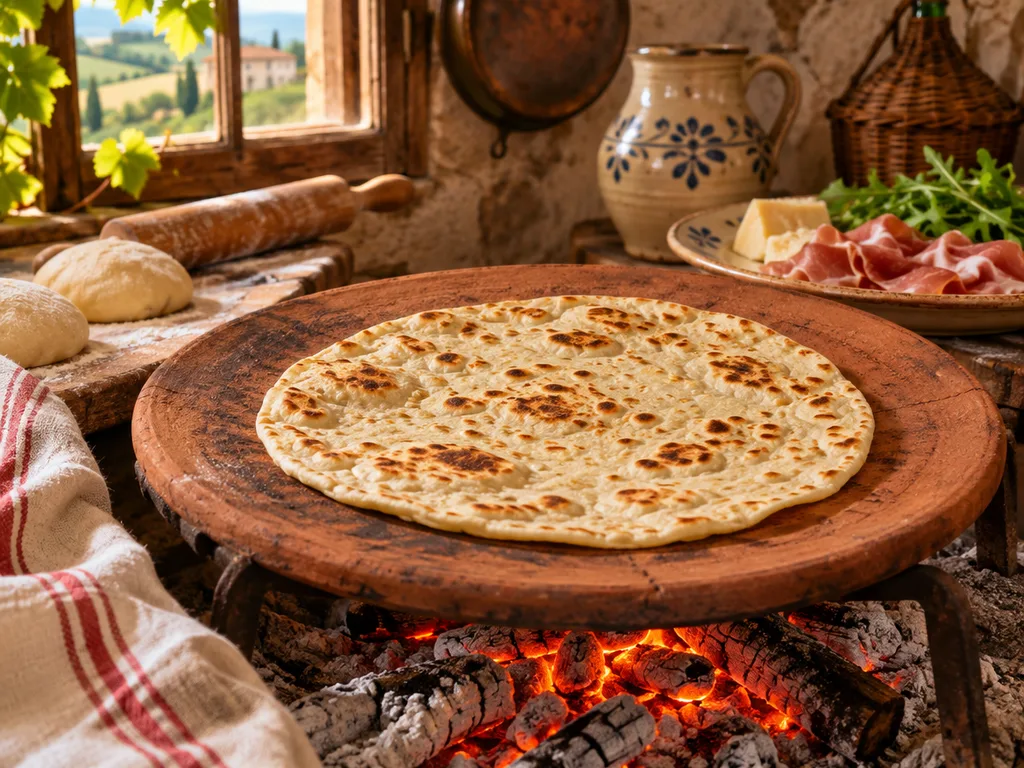
Piadina is an unleavened flatbread from Romagna, the eastern half of Emilia-Romagna. It was traditionally cooked on a clay disc called a 'testo' over the hearth. For centuries it was the bread of the poor: farmers made it quickly between one bread-baking day and the next.
Its cultural moment came from the poet Giovanni Pascoli, who was born in San Mauro di Romagna. In his poem 'La Piada', published in 1900, he praised it and called it 'the bread, indeed the national food, of the Romagnoli'. He also helped make the Italian word 'piada' official, adapting the dialect word 'piè'.
After the Second World War piadina spread from the countryside to the cities and then to the beach kiosks of the Riviera. In 2014 the EU recognised Piadina Romagnola IGP. There are two types: the classic, thicker one (15–25 cm across), and the Riminese, which is larger and thinner. The classic filling is prosciutto crudo, soft squacquerone cheese and rocket.
Sources
Next story: Pane ca' meusa: Palermo's spleen sandwich · All history articles